FAQ
How do I contact the Voxel?
For ticketing questions please email email.
For general inquiries please email email.
What is the Voxel?
The Voxel is a privately owned black box theater in the heart of Baltimore city. It is the teaching center and research lab for Figure 53, as well as a theater, incubator, and resource for performing artists.
Can I rent the space?
No; we do not offer rentals at this time. We are focused on theater performances, classes, and R&D for QLab.
What's up with your Artist Residency program?
Since 2021, we've hosted over 30 Artist Residencies. Each artist got 24/7 access to our building, our equipment, and support from our team. Each of these residencies was completely free to the artist and lasted between one and five weeks. The artists produced a show and got to keep 100% of their ticket sales.
In 2027, we're taking a break from running our Artist Residency program. (We're a tiny team and it's a lot of work!) However, we have some very exciting shows planned, including several groups who first came to The Voxel via an Artist Residency.
Do you have dedicated parking?
No; the Voxel does not have a dedicated parking lot, but there is free street parking near the the theater.
Please check out our Visit page to learn more about parking and accessibility.
Where does the name "Voxel" come from?
In computing, a "voxel" is like a three-dimensional pixel. Just as "pixel" came from the words "picture element", a "voxel" is a "volume element". Voxels are a way to divide space into a grid of cubes. You can represent physical objects as a collection of voxels, much like you might draw a picture as a collection of pixels.
While The Voxel theater does not dogmatically prioritize the use of technology in the arts — we believe that technology is not artistically interesting in and of itself — the space was born from many years of building software for theaters.
The name "Voxel" reflects how this theater both originated from the two-dimensional world of a computer screen and how our creative efforts now extend into the three-dimensional world of physical & embodied space. Plus, a black box theater is a bit like one big voxel, which is neat.
Do you use AI at The Voxel?
Art is an expression of human thought and feeling. While we are curious about the ways in which AI can be used as a tool – and indeed we do use AI to build tools – our interest in art is because it is human and interpersonal. We are interested in what artists wish to express, not what computers wish to express.
What's the history of the building?
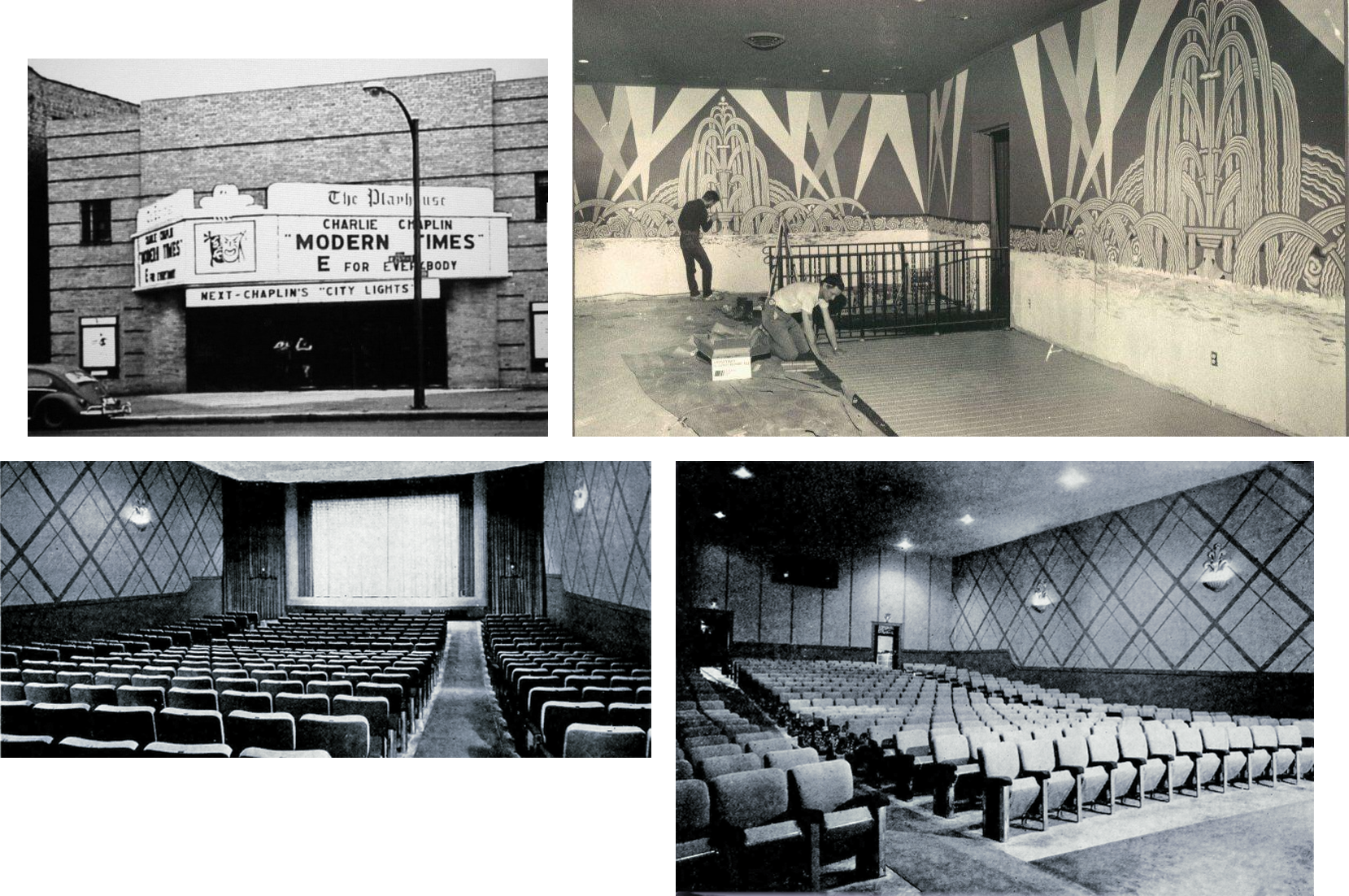
The theater was built in 1946 and was a popular destination for moviegoers through the late 1980s. It fell into disrepair and went through numerous owners until we purchased it in 2015. We performed a ground-up renovation with architects Ziger|Snead and reopened the theater in 2020 as a black box theater designed for live performance.
Who is doing this?
The Voxel is a project of Chris Ashworth and Figure 53, a small but mighty Baltimore-based company that makes software for the performing arts. Chris founded Figure 53 in 2006, and created their flagship product QLab. Figure 53 software runs live events in over 100 countries around the world, from basement venues to the world's largest arenas. Chris built the Voxel as a legally separate but spiritually related company in 2020. His Voxel teammates call him the "boss-slash-intern", which is a pretty good description. He also takes most of the photographs for Voxel productions.
Alec Sparks is The Voxel's Technical Director. He make sure the theater is reconfigured appropriately for every event, teaches new designers and technicians how to use our equipment, maintains our technical manual, and occasionally authors lab notes. Outside of The Voxel, he makes tools for behind-the-scenes folks at Stage Hacks, OSC.fyi, Deck Rack, and Stage Blocks Co.
Tessara Morgan Farley is our Director of Production. She helps artists ensure their shows (and all the required pre-production) actually happen and that patrons have a comfortable experience at The Voxel. She co-founded Truepenny Projects, a Baltimore-focused team of artists making new works for the gallery and the stage. She also is a freelance director for productions across Baltimore.